
We decided to try and avoid any overnight passages going forward if we could help it. Traveling from Coffs Harbour directly to Port Stephens would have required an overnight passage so we planned two stops along the way, one stop at south west rocks for a quick sleep, and one stop in Forster for a few days of rest before continuing on.
The trip from Coffs Harbour to South West Rocks went smoothly, there were light winds so we spent some of the time motor sailing to make it to South West Rocks at a reasonable time. We were able to anchor around 4pm and had some time for dinner and a bit of rest before continuing on to Forster around 2.30am.
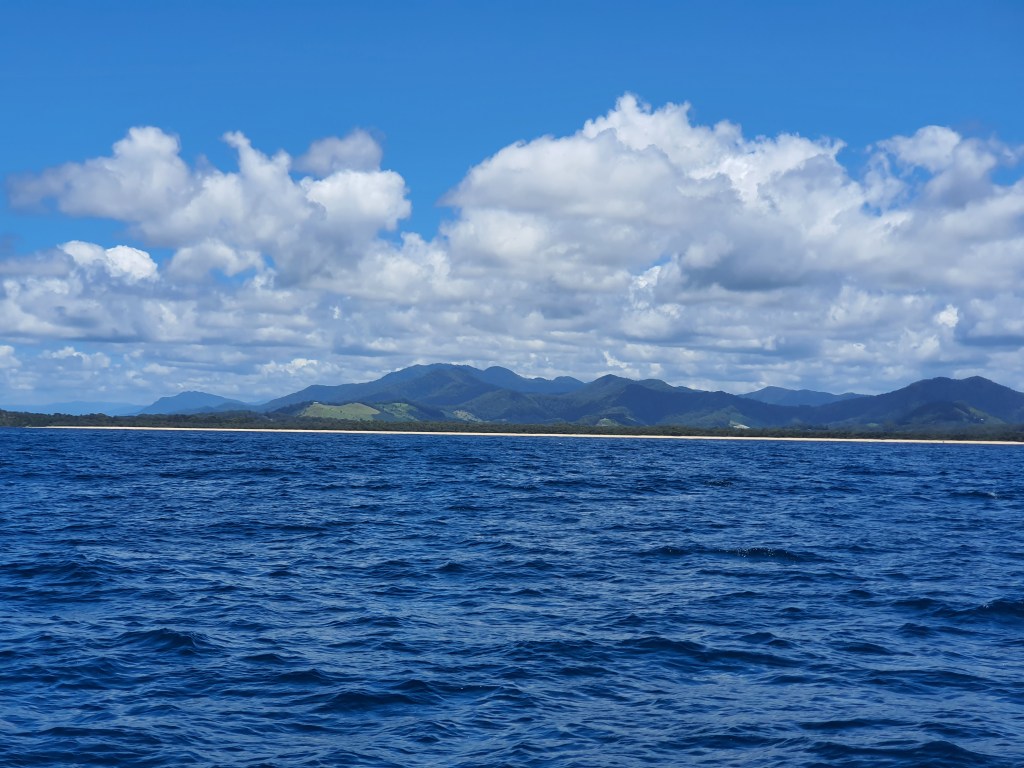
From South West Rocks to Forster we ran into some rain but did manage to get some sailing in and arrived in Forster in the afternoon at just the right on time to cross the bar. From there our story gets a little bit hairy, and we ended up staying in Forster for quite a bit more than a few days.
The title says it all, we lost our beautiful Rocna 20kg anchor while we were anchored in Forster. Hindsight is always 20/20 and looking back on the experience we should have taken one of the two public moorings available in the river (as suggested by the maritime patrol the day we arrived). We were trying to follow the rules though and based on the knowledge we had at the time we arrived, the moorings were limited to 24 hours and rated for up to 25 knots of wind. Since we were planning to stay 3 days, with one day having winds forecasted 30 – 35 knots, we opted to drop our anchor instead of using the available moorings. Of course we found out later the mooring rating was up to 25 knots for 20 tonnes, noting our boat is 6 tonnes.
One major thing we didn’t realize would affect us so much was the current from the tides in the location we were. There is a large network of lakes connected through the inlet to the Ocean in Forster and during each high and low tide, all those bodies of water fill up and empty.
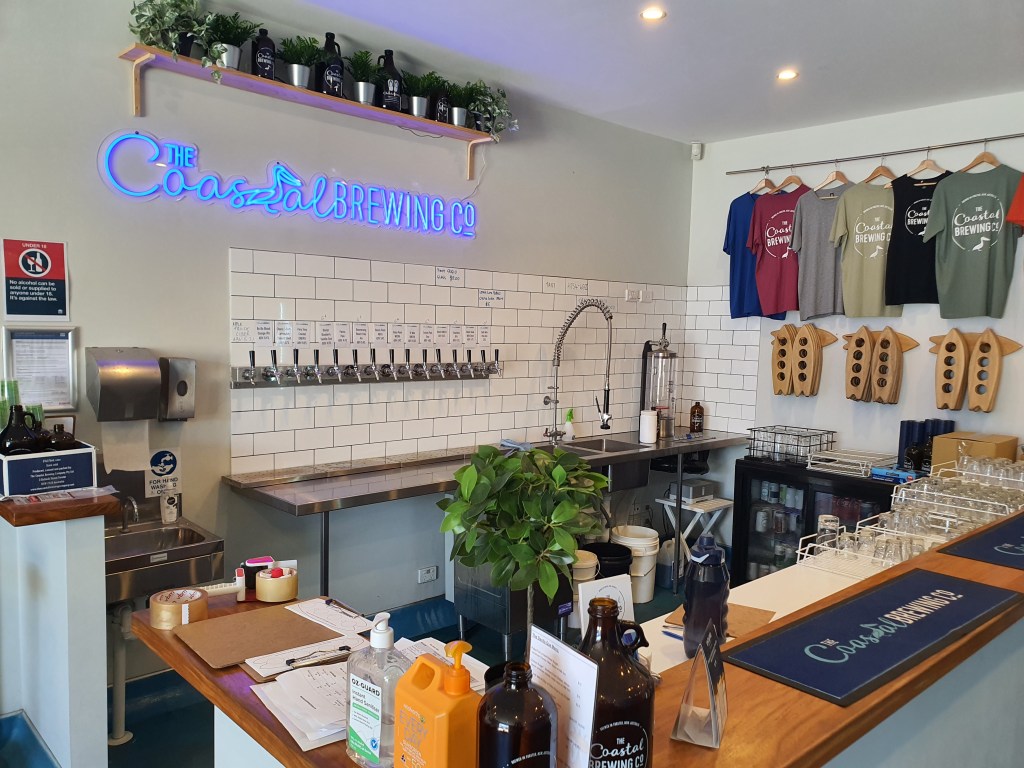
We arrived on Tuesday and spent the first two days doing some exploration of the town, enjoyed the local brewery and restaurants etc. Thursday was the day there were high winds, that day we headed back to the boat early to keep a close eye on things. Our ground tackle held us perfectly when the current and the wind were in the same direction, unfortunately, around 10pm the tide changed. This created a scenario where the tide was exactly opposite to the wind.
Wind against tide basically creates an epic battle, each time the wind was winning we would be on one side of the anchor, and when it reduced and tide was stronger, and the boat would swing to the opposite side. After hours of near continuous swinging, back and forth, our chain hooked around our keel.
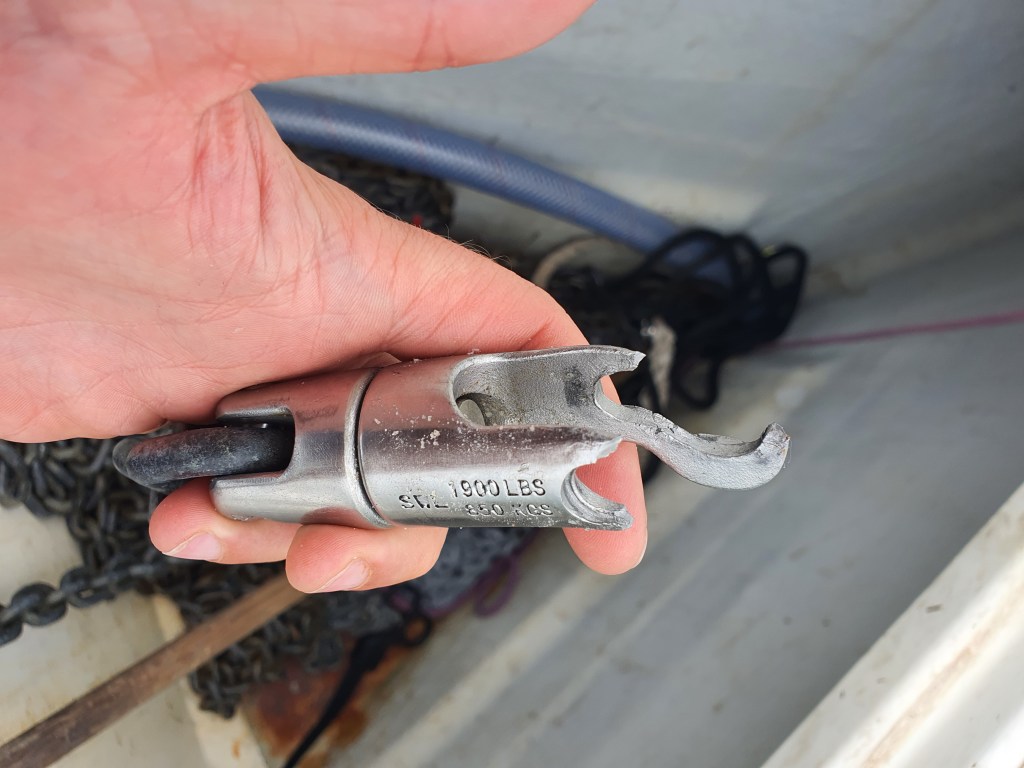
Once our chain was around the keel it reduced drastically the holding power and effectiveness of our anchor, and we slowly dragged. This stopped when our anchor managed to bury itself so strongly into the sand that our snubber snapped and then 30 min later our swivel (the connector from the anchor to the chain) tore away from the anchor.
Preemptively, I had added a secondary snubber during the day, just in case, this most likely saved our windlass. When it snapped I was on the bow trying to see if I could do anything about what was happening and I can say from experience now that a snubber line snapping next to you is very scary.

Our situation was not life threatening but I had dialed “000” in case it of it worsening. Our boat was in front of a bridge, next to a sand bank, and being pushed by the current towards a break wall, so there were plenty of things to make our situation a lot worse. We had on our life jackets, and I had been told that it was better to call head of a potential emergency than getting them engaged too late.
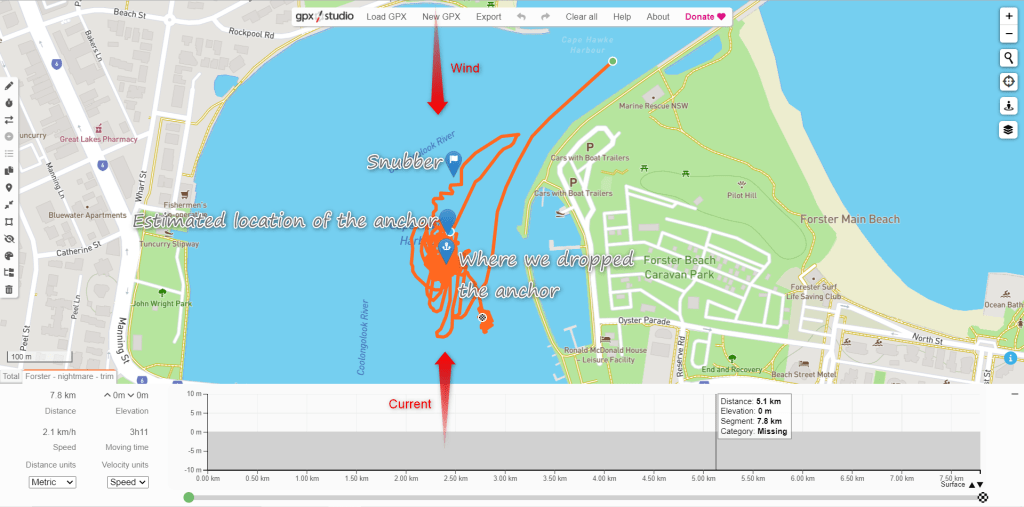
As soon as the swivel broke and we lost our anchor, the boat started to drift rapidly. Erica was at the helm and quickly reacted to get the engine on and the boat back to a safe place. She maneuvered to keep our position while I was engaging with marine rescue and retrieving the 25 meters of chain.
The marine rescue vessel arrived about an hour after and helped us get to one of the moorings. They initially passed next to us without stopping, some miscommunication had happened and they were on the look out for a tinny (small tin boat) next to the break wall, not a 36ft sailing vessel.
At 1:30 am we were in a really different place, safe, and with a clear sky. The wind was non-existent and the tide was slack. Nonetheless I was still stressed, and it took me a lot of time to relax and fall asleep.
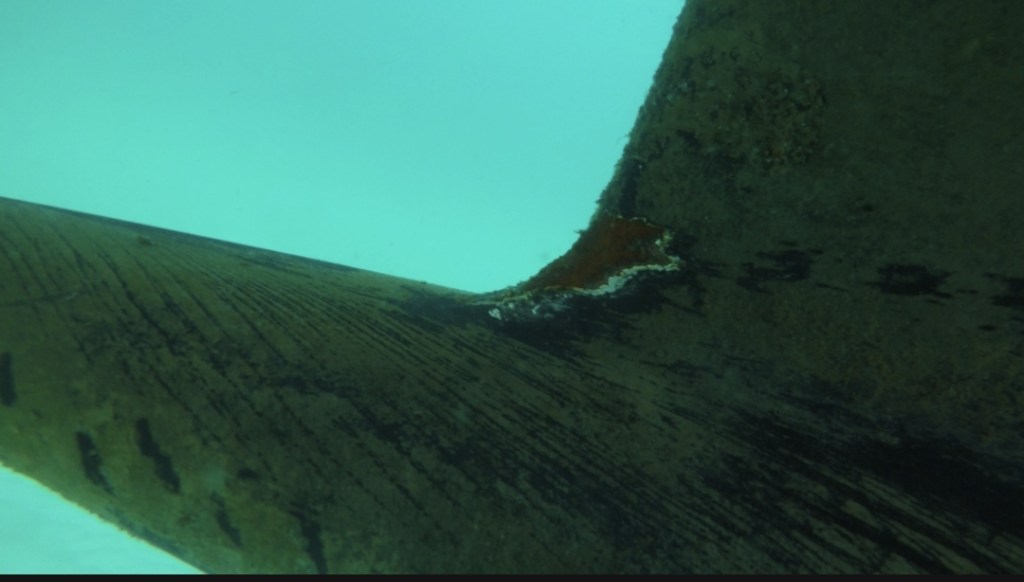
Our boat has a few scars now, which we will investigate further at our destination. From our inspections they are mostly cosmetic, none of the keel bolts seem to have been impacted, it just seems that a new coat of antifouling might be due earlier than expected.


What about the anchor?
We spent 4 days and even hired a diver (Drew) to help searching for our lovely Rocna, unfortunately we were not able to locate it. I analysed all of our GPS points from that night and thought I had a good idea of where it buried itself. The diver agreed with my estimation and even did some digging in the area, but he wasn’t able to find it. Drew was recommended to us initially by the local dive store and again by the owner of a small boat rental store named Rob.
The current at the location where we lost it wasn’t helping us either, we only had about 1 hour each day to look for it during slack tide. Also, the marine traffic in this area is busy during the weekend.
Our back up plan if we couldn’t find our lost anchor was to source a new one via Rob’s store, he was able order a basic plough anchor through his vendor. It was going to cost a fraction of the price of what we paid for the one we lost. We didn’t want to do a passage without any ground tackle, so we spent close to a week and a half in Forster in the end. The last chunk of time was spent trying to find our lost anchor or source a replacement. The time went something like this:
- Tuesday and Wednesday we explored the town as planned, expecting to leave on Friday or Saturday weather permitting
- Thursday night we lost our anchor
- Friday we tried to get ahold of someone to help us find it/find it ourselves
- Saturday there was too much activity in the water for the diver to feel comfortable diving but we continued looking from the surface and discussed our backup of ordering a new anchor with Rob
- Sunday Drew dove during slack tide and wasn’t able to find anything, we confirmed with Rob that we would like him to order the new plough anchor Monday morning. At the time he felt the anchor should arrive Tuesday noon
- Monday confirmed with Rob he had ordered the new anchor
- Tuesday the shipment never came
- Wednesday the shipment came but didn’t include our anchor. At this point we didn’t have a lot of options as we really needed to leave Thursday morning for the weather window. We were able to find a slightly larger (20 kg vs 16 kg), used anchor from the dive shop in Forster. Although it wasn’t much less expensive than the new one we were trying to order, our plan was always to get something nicer when we had more options available, so it would do fine as a backup.
Finally on Thursday morning we could now leave Forster and continue our journey to Port Stephens.
Ground tackle thoughts
With boating we always seem to only learn things the hard way.
I understood that your ground tackle is only as strong as your weakest link, and that the system needed to be calibrated and designed for use (length of chain, windlass power etc.). What I never put into the equation was that if your anchor had a holding power greater than the breaking load of one of the links, you will loose your anchor before dragging.
Our Rocna was too strong for our ground tackle design 😔.
At least we got to see Forster
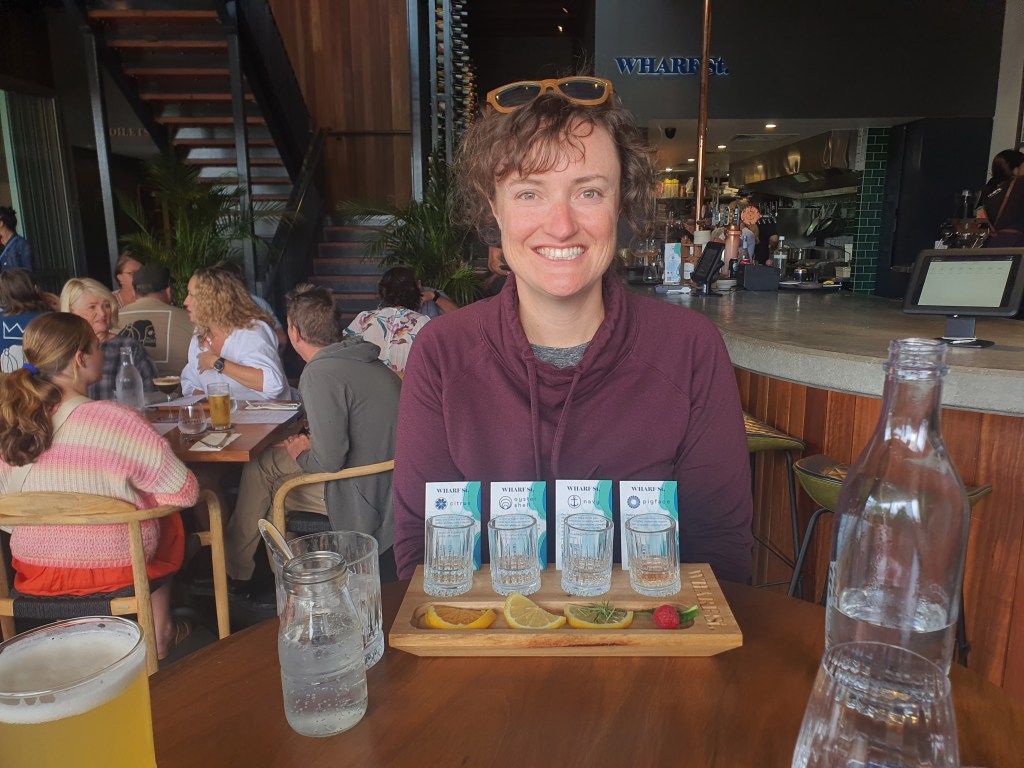
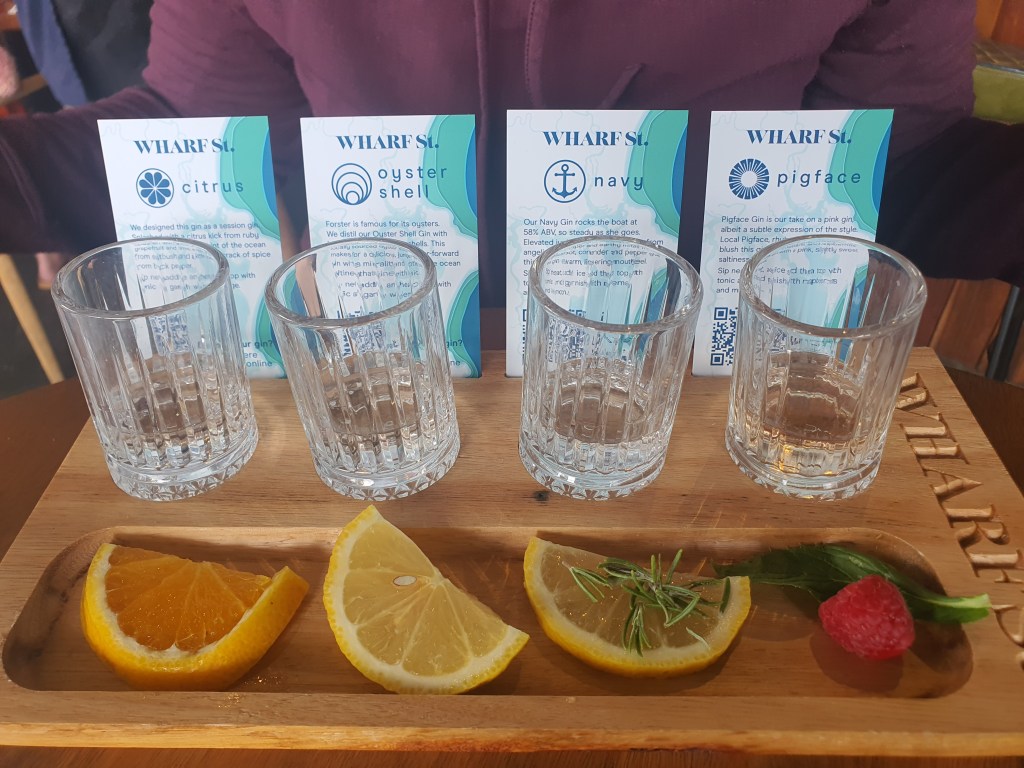
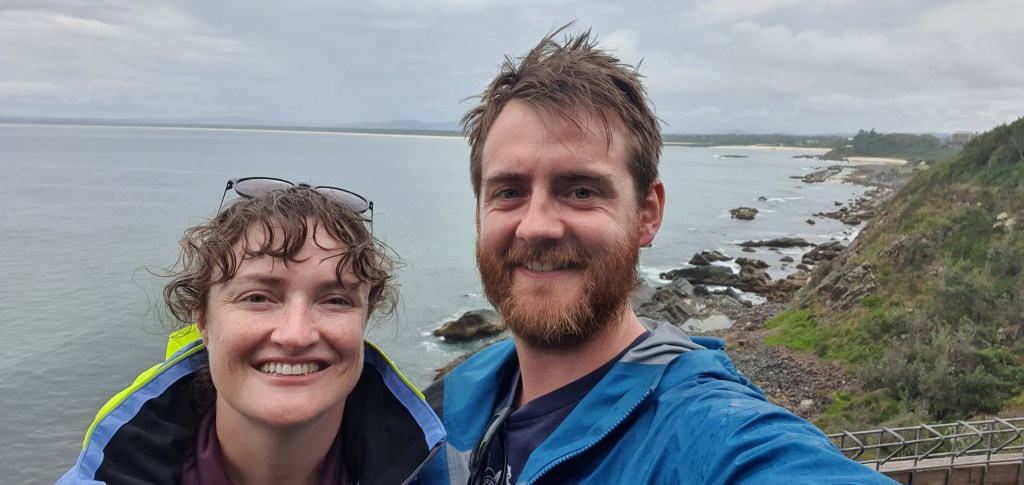
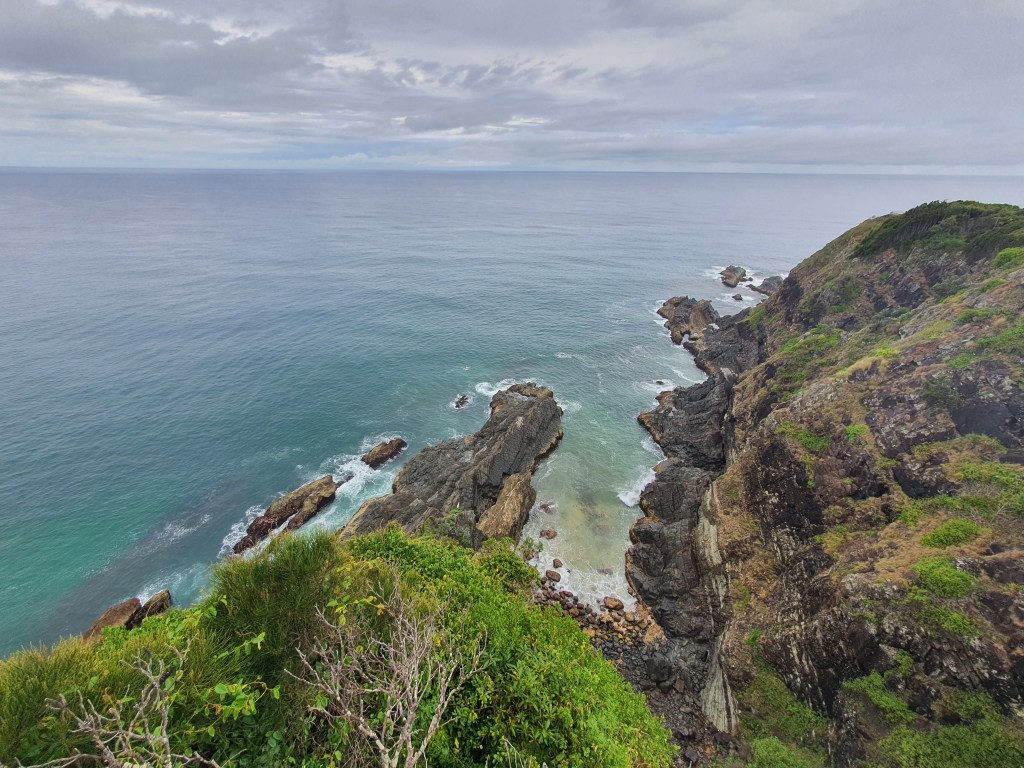


A big shout out to Drew for your helping to search for our anchor and Rob for helping to source one. We met so many people in Forster who were unbelievably helpful and sympathetic to our situation, it was by far our favorite part of the time we spent there.

RIP Rocna 20
 the Adventures of Erica and Nico
You must be logged in to post a comment.